I have to tell you about this garage, because every time I look at the numbers I still kind of can't believe it.
For years it was just a detached shop sitting in the backyard of one of our rentals. Full of boxes and somebody's old furniture, bringing in five hundred dollars a month as storage. That was it. Five hundred bucks for a building to hold junk.
This same building is now on track to net us around fifty thousand dollars this year as a short-term rental.
I know how that sounds, so I want to walk you through the whole thing, because it was nowhere near as clean or as quick as that one sentence makes it look. It took eleven months just to get the permits. We put about a hundred and fifty thousand dollars of our own cash into it. And honestly, there were a few months in the middle where I wondered if we'd made a mistake.
So let me start at the beginning.
First, the law that made any of this possible
A few years back, Washington passed a bill called HB 1337, and it quietly changed what's possible on a lot of properties around here.
Here's the gist of it. If you own property in Washington and you can meet your setbacks and the rest of the code requirements, you're allowed to add up to two more dwelling units. There's no requirement that you live on the property, which matters a ton if you're an investor and not a homeowner. And in a lot of cases, you can eventually condo those units and sell them off individually.
So a regular single-family rental can legally turn into three income-producing units. And down the road, each of those could become its own sellable asset. The more I sat with that, the more I couldn't stop thinking about it.
We happened to own the perfect candidate. A four bed, two bath house with that detached shop sitting in the back. The shop already had electrical and plumbing run to it, and it was earning us all of five hundred dollars a month in storage rent. Leaving that kind of density on the table felt silly, so we decided to keep the existing structure and get it permitted as a real dwelling unit.
That was the plan, anyway. It's exactly where things got complicated.
Where it all went sideways
Our first meeting with the city went great, which in hindsight should have been my first warning.
They looked at what we wanted to do and basically said no problem. Just give us some hand drawings, this is a straightforward residential remodel. We already had electrical and plumbing on site, so there wasn't much standing in the way. We walked out feeling pretty good about the whole thing.
So we did exactly what they asked. Hand drawings, full submittal, all of it.
And then they came back with a completely different answer. Now we needed to meet current code, and that meant the entire structure had to be engineered.
That one change added the better part of a year to our timeline, and I'm not exaggerating. It turns out that finding a structural engineer who's willing to stamp an existing building is its own special kind of headache. Plenty of them will happily take on new construction, but an old shop that someone wants to turn into a house? Most of them passed. It took us about five months just to find someone who would take the project, get the stamps done, and let us resubmit.
By the time we finally had building permits in hand, eleven months had gone by.
If I'm being really honest with you, knowing what I know now, we probably would have just torn the thing down and built two brand-new units instead. New construction follows current code from day one, so you skip the whole prove-this-old-building-is-safe ordeal. It would have cost more up front, but it would have been so much faster and cleaner. If you ever find yourself weighing whether to convert an existing structure or demolish and build new, ask that question hard at the very beginning, before you get attached to the building you already have.
The build took way longer than I expected
Naturally, the permits came through right as we were leaving for a month in Greece.
So nothing actually started until about the middle of October 2025. And I'll admit, I assumed this would be a quick turn. A few months, get in, fix it up, furnish it, open the doors. That is not at all how it went.
We didn't go live until April 8th of 2026.
Most of that came down to customization. This was never a paint-and-carpet situation. We were retrofitting an existing structure into something people would genuinely want to book, and that kind of work is slow and detailed and full of one-off decisions. Throw in some classic Pacific Northwest weather, and the timeline just kept stretching.
For the part that probably matters most to you, we put about a hundred and fifty thousand dollars of our own cash into the whole project. No loan on the property at all. That was a deliberate choice, and it changes how the returns read, which I'll get to in a minute.
Why the design mattered so much here
Here's something I had to be really honest with myself about. This property has no natural reason to exist as an Airbnb.
It sits in a regular residential neighborhood. There's no lake out the window, no national park down the street, nothing pulling travelers in on its own. Almost everyone who books it is in town to visit family or friends who live nearby. That's the entire demand pool. So if we'd put up a plain, forgettable three-bedroom, we'd have been stuck competing on price with every other plain, forgettable three-bedroom in the area.
So we didn't do that. We built something people would actually want to tell their friends about.
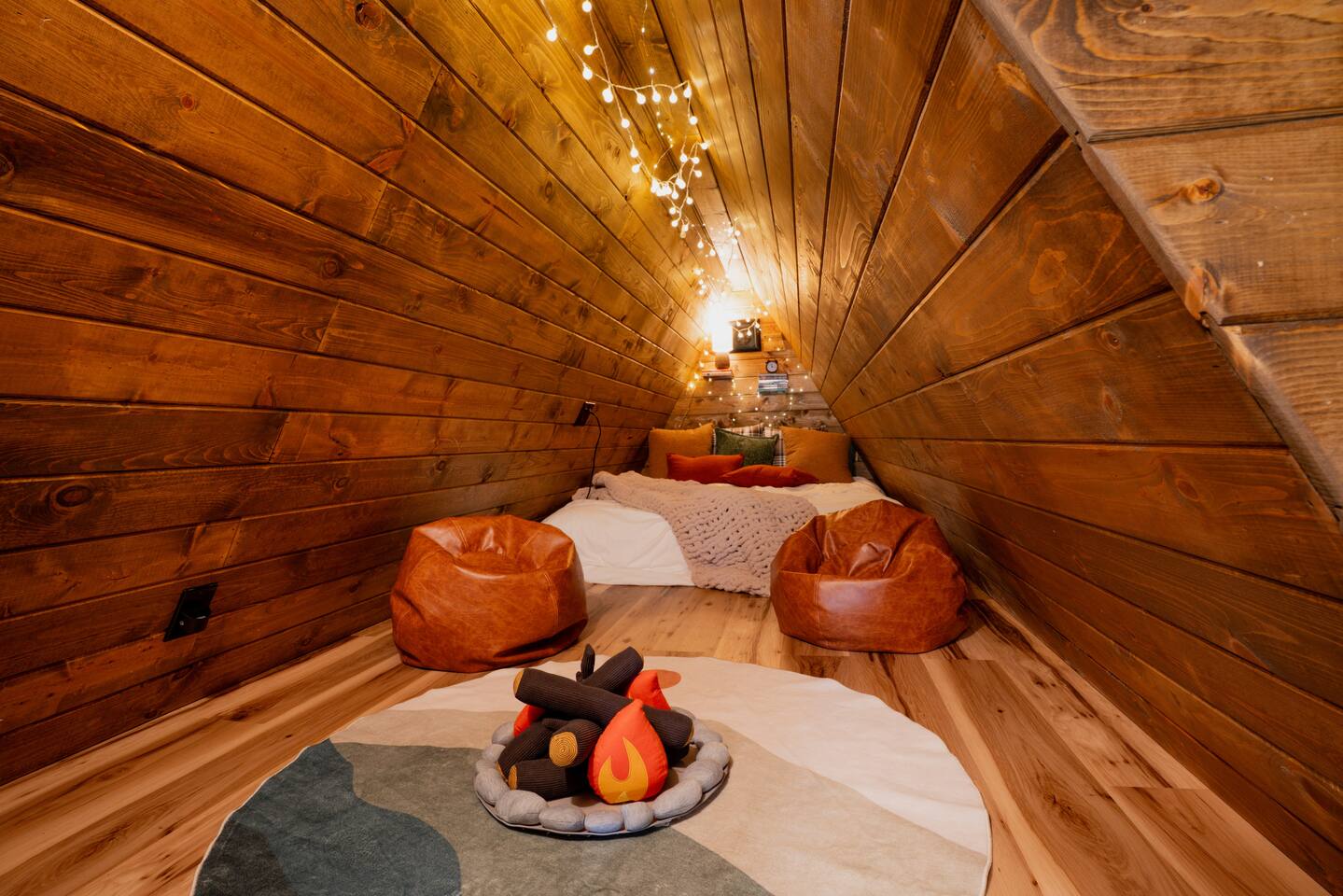
We turned the unusable attic space into a secret third bedroom, which guests absolutely love. Cedar-lined, string lights, a little campfire rug on the floor. It's the photo people stop scrolling on.
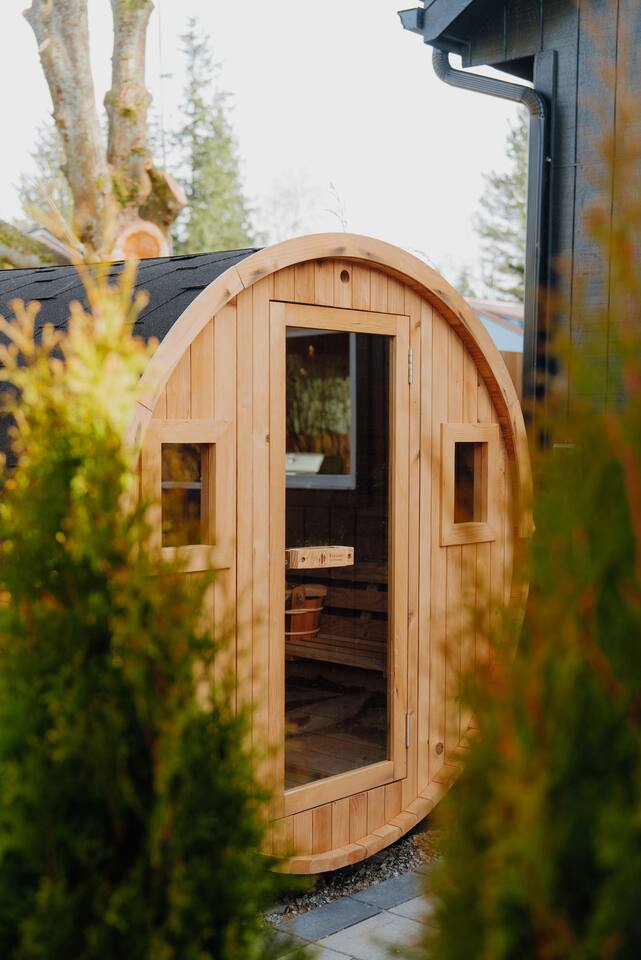
We put in a barrel sauna out back, tucked among the evergreens.
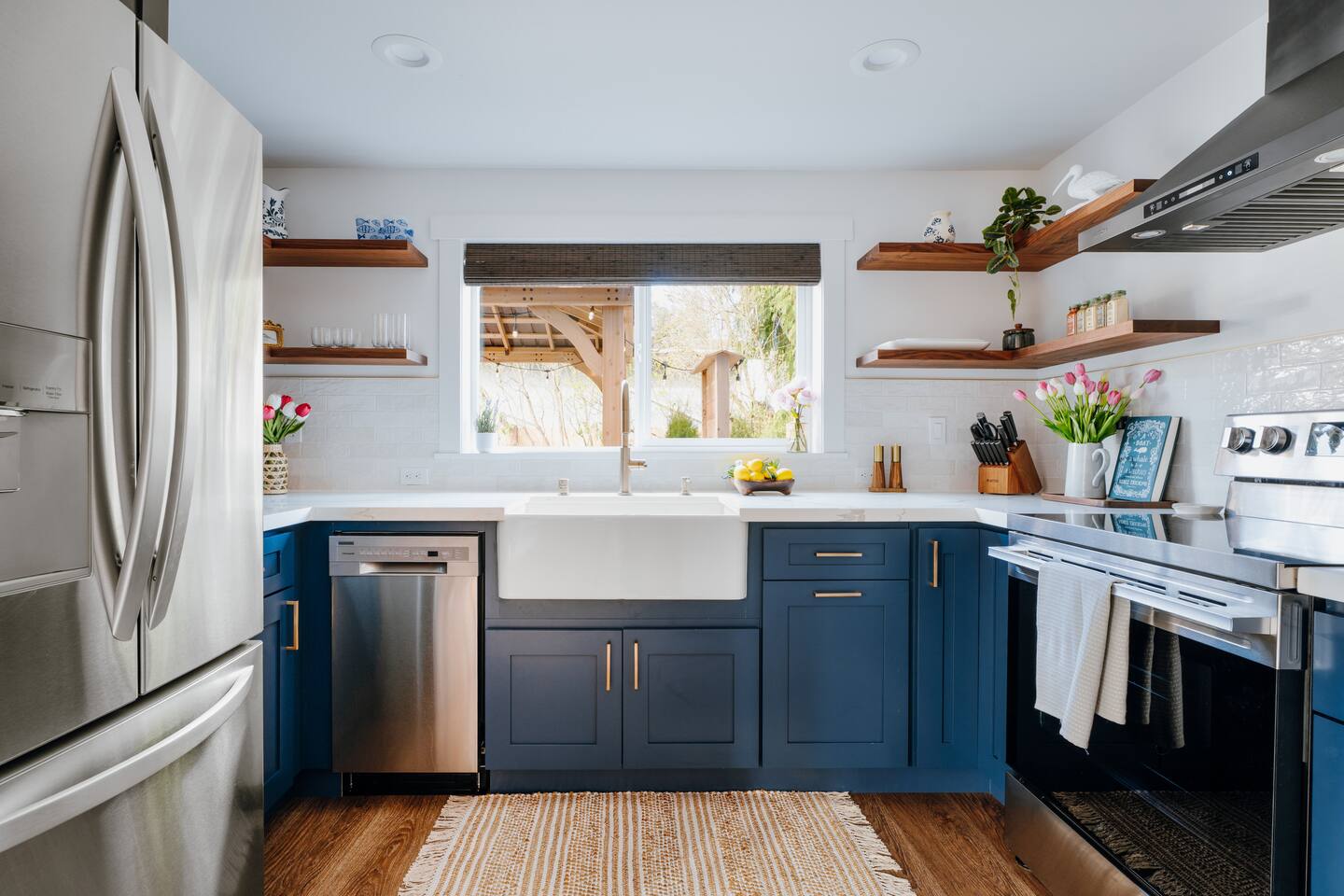
And we poured real money and thought into the kitchen and the living space, the kind of rooms that make a place feel like a stay instead of a crash pad. Furnishing a place to this level adds up fast, so we leaned on a free trade-discount tool to keep the bill down, which I broke out in how we saved money furnishing a short-term rental with Minoan.
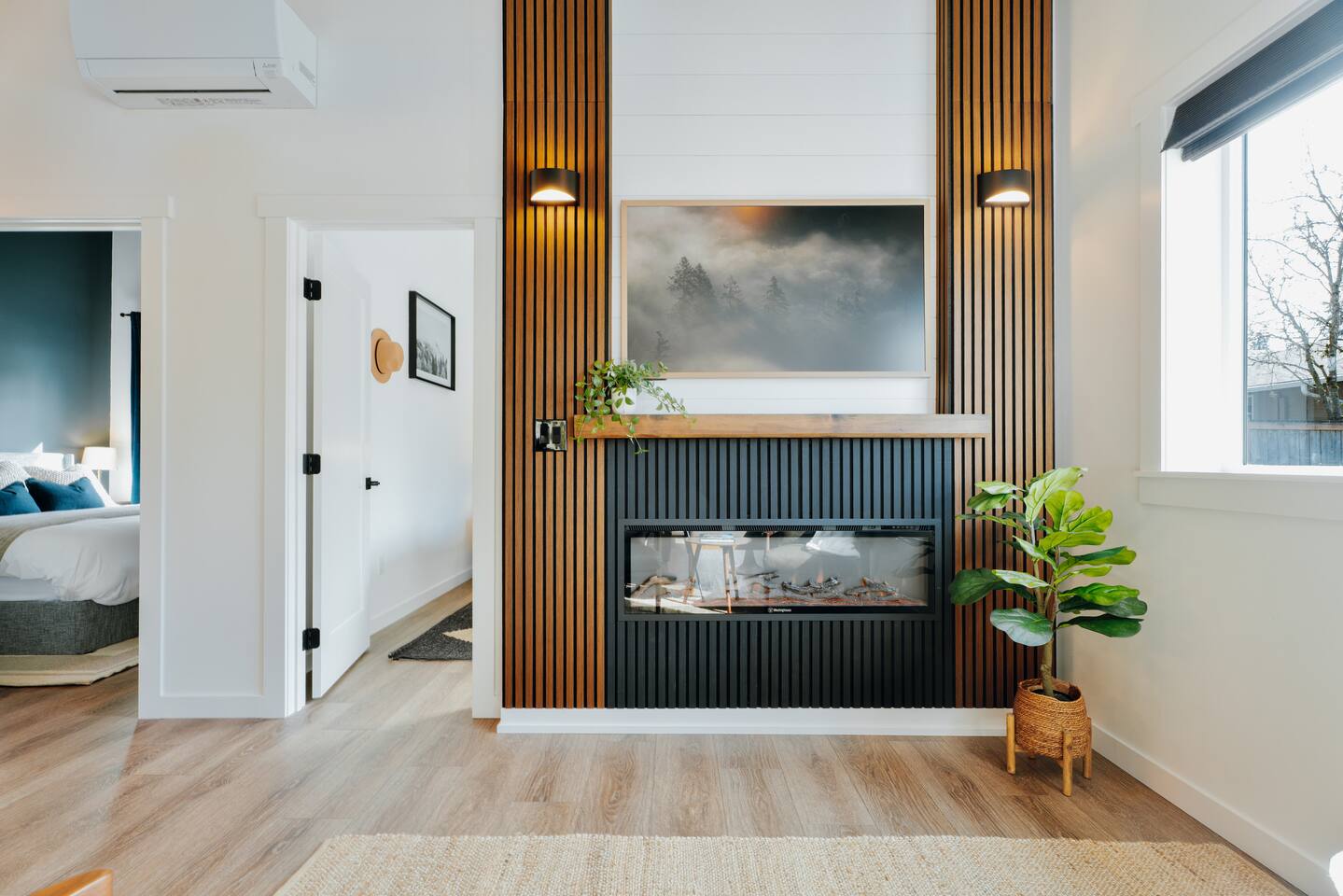
The property is called Timber & Tide, and the whole idea was to give people a reason to choose our place over the boring option down the road, even when the only reason they're in town is a birthday or a graduation.
It worked. But I do have one real regret, and it's an expensive one.
We could not fit a second bathroom no matter how hard we tried. Between the existing footprint and the code requirements, it just wouldn't pencil out. And I'm pretty convinced that one missing bathroom is the single biggest thing holding our revenue back. A three-bed, two-bath rents very differently than a three-bed, one-bath. So if you ever do a conversion like this, fight harder for that second bathroom than you do for the extra bedroom. The bedroom gets you found in the search results. The bathroom is what gets you booked.
Okay, let's talk about the numbers
After all of that, you're probably wondering whether eleven months and a hundred and fifty grand actually paid off.
| Storage Garage | Themed Airbnb | |
|---|---|---|
| Use | Boxes and old furniture | Booked short-term rental |
| Annual income | About $6,000/year ($500/mo) | On track for about $50,000 net year one |
| Financing | None | None ($150K cash, no loan) |
In our first 60 days, we've netted a little over twelve thousand dollars. And when I say net, I really mean net, after the platform fees and everything else that comes out of the gross. That's averaging around six thousand a month, and we're just now heading into our busier season, so I expect that number to climb.
If you run the simple version for year one, we're looking at roughly fifty thousand dollars net on a hundred and fifty thousand of cash, with no debt on the property. That works out to somewhere around a 33% cash-on-cash return. On a building we already owned. That used to make us six thousand a year holding boxes.
And honestly, the cash flow isn't even the part that gets me most excited.
Here's the piece I almost forgot to tell you
Because the equity story might be even bigger than the cash flow story.
We bought this entire property, house and shop and all, for three hundred and ten thousand dollars back in 2017. The front house by itself is worth around six hundred thousand today. So we were already sitting on a serious pile of equity before we ever touched the garage.
Then we spent that hundred and fifty thousand converting the shop. And because of HB 1337, we can actually condo that unit off and sell it on its own. Based on what it is now, we'd expect it to sell for somewhere around five hundred and fifty thousand.
So let me lay the math out the way I worked through it.
Our all-in cost on the whole property is about four hundred and sixty thousand. That's the original three hundred and ten plus the hundred and fifty we poured into the conversion. If we condo off and sell just the converted unit for five hundred and fifty, we get back every dollar of that four hundred and sixty, plus about ninety thousand on top. And we still own the front house, worth six hundred thousand, basically free and clear.
Now put both pieces together. The lot is worth about $1.15 million today, against four hundred and sixty thousand all-in. That's nearly seven hundred thousand dollars of equity we created on a single property, most of it by finally using a building that was already standing there making us five hundred bucks a month.
That's the part that really gets me. And it's exactly why we're now going back through our portfolio and looking at every property we own with a big backyard. Because that backyard might be the most valuable thing we're not using yet, which is the whole idea behind the build-to-rent pivot.
What I'd actually tell you over coffee
There are a few things I keep coming back to with this one.
The first is that Airbnb is not dead, no matter how many times you hear it. I know the headlines all say the market's saturated and it's over. But then we drop a thoughtfully designed little property into a neighborhood with zero natural draw, and it nets six grand a month right out of the gate. The lazy listings are the ones dying off. The well-designed places that actually give people an experience are doing just fine.
The second is that converting an existing structure will surprise you, almost always in the form of code and engineering you didn't see coming. Budget way more time than that friendly first city meeting suggests, because the first answer is rarely the final one. And get the engineering question fully answered before you submit, not after.
The third is to honestly price out both paths, converting versus tearing down and building new, before you commit to either. We chose to save our structure and it cost us most of a year. Sometimes building new is genuinely the faster, cleaner road, even when it looks more expensive on paper.
And the last one is to really understand where your demand is coming from. If the only reason anyone visits your area is to see people who live there, then you're not selling a location. You're selling the stay itself, so you'd better make the stay worth choosing.
If you want to get into the tax side of running a short-term rental like this, how you track your hours and material participation matters way more than most people realize, but that's a whole separate conversation. The STR loophole explained walks through why those hours can offset other income, and I built STR Hours for exactly that tracking, so I'll point you there rather than turn this into a tax lecture.
A few questions I get asked about this
Does HB 1337 require you to live on the property?
No, and that's one of the biggest things about it. There's no owner-occupancy requirement, which is what makes it actually work for investors holding rentals, not just homeowners adding a unit.
Can the additional units be sold separately?
In a lot of cases, yes. The units can be condo'd and sold off individually, which is a big part of what makes the added density so valuable long term. You'll want to confirm the specifics with your own jurisdiction, though.
How long does a conversion like this take to permit?
Ours took about eleven months, and the bulk of that was the structural engineering requirement on an existing building. New construction can honestly move faster, since it follows current code from the very start.
Was converting the garage worth it?
For us, absolutely. We went from about six thousand a year in storage rent to roughly fifty thousand net in year one, on the same structure, with no loan on it. The permitting was painful, but the return on the back end made it worth the wait.
What's next for us
We're not done with this kind of thing. We're actually in the middle of converting another rental right now, half of a duplex over in Idaho, into a short-term rental. Different state, different rules, and hopefully a much shorter fight with the permit office this time around. I'll tell you all about it once we're through it.
If you want to follow along with that one and everything else we're building, come join the newsletter and hang out with us in the ROI Inner Circle. This is exactly the kind of stuff we love getting into the weeds on together. And if you just want to see what we actually built, you can go take a look at Timber & Tide.
HB 1337 requirements, and how they get applied, vary by jurisdiction, and the rules do change. Confirm the current code and process with your local building department before you plan a project. This is our experience as investors, not legal or tax advice.